
Espresso Machine With Built-In Grinder vs Separate Grinder: Which Is Better?
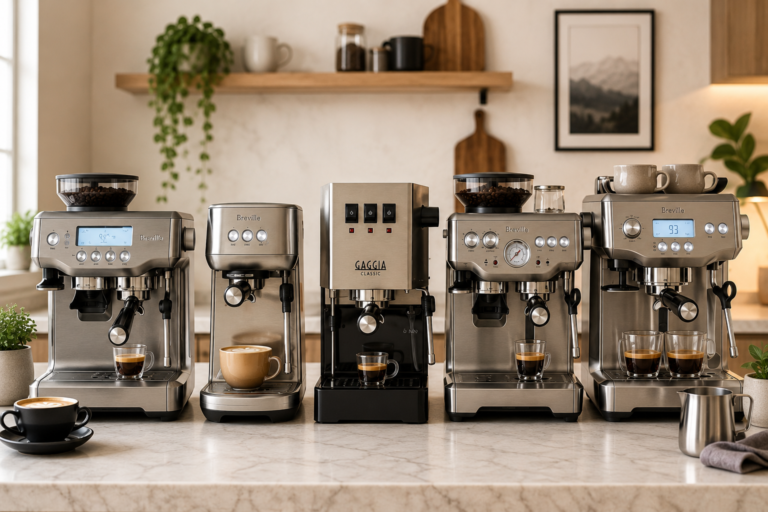
Espresso machine with built-in grinder vs separate grinder is one of the biggest decisions you’ll face when choosing a home espresso setup. Both options have clear advantages, but the right choice depends on how much you value convenience, control, counter space, and future upgrades.
Should you buy an espresso machine with a built-in grinder, or choose a separate espresso machine and coffee grinder?
At first glance, an all-in-one machine seems like the obvious choice. You get everything in one compact setup, there are fewer appliances on your counter, and your morning routine can feel much simpler.
But separate grinders remain the preferred choice for many serious home espresso enthusiasts — and there are good reasons for that too.
A dedicated grinder usually gives you more control over grind size, makes future upgrades easier, and allows you to choose each part of your espresso setup independently.
So which approach is actually better?
The answer depends on what you value most: convenience, espresso quality, counter space, budget, or long-term flexibility.
In this guide, we’ll compare an espresso machine with built-in grinder vs separate grinder setup across all of those factors so you can decide which option makes the most sense for your kitchen and coffee routine.
Espresso Machine With Built-In Grinder vs Separate Grinder: Quick Comparison
Before getting into the details, here’s a simple overview.
| Feature | Built-In Grinder | Separate Grinder |
|---|---|---|
| Convenience | Excellent | Good |
| Counter Space | Less required | More required |
| Ease of Use | Beginner-friendly | Requires more setup |
| Grind Control | Good | Excellent |
| Upgrade Potential | Limited | Excellent |
| Espresso Precision | Good | Potentially better |
| Maintenance | One main appliance | Two appliances |
| Initial Cost | Often simpler | Can be higher |
| Long-Term Flexibility | Limited | Excellent |
| Best For | Convenience seekers | Espresso enthusiasts |
The biggest difference isn’t necessarily whether one setup can make good espresso.
Both can.
The real difference is how much control and flexibility you want over the process.
What Is an Espresso Machine With a Built-In Grinder?
An espresso machine with a built-in grinder combines two essential pieces of coffee equipment into a single appliance.
Instead of buying a coffee grinder separately, you pour whole coffee beans directly into the hopper on top of the machine.
The grinder then grinds the beans before brewing your espresso.
Depending on the machine, you may be able to adjust grind size, dose, shot volume, temperature, and other settings.
Some models require you to move the portafilter manually from the grinder to the group head, while more automated machines handle much of the process for you.
The appeal is obvious.
Instead of having:
coffee grinder + espresso machine + separate controls
you have one integrated system designed to work together.
For many people making espresso at home for the first time, that’s extremely attractive.
If you’re currently shopping for this type of setup, you can also read our guide to the Best Espresso Machines With Built-In Grinders, where we compare specific all-in-one options.
Advantages of an Espresso Machine With a Built-In Grinder
There are several reasons these machines have become so popular.
1. Everything Is in One Place
Convenience is probably the biggest advantage.
You don’t have to choose a grinder separately, find additional counter space for it, or think about whether your grinder and espresso machine are a good match.
You simply add beans and start preparing your coffee.
For busy mornings, that streamlined workflow can make a noticeable difference.
2. They Save Counter Space
Kitchen counter space is valuable.
A separate espresso machine and grinder can take up considerably more room than an integrated setup, especially if you’re also keeping a kettle, toaster, blender, or other appliances nearby.
An all-in-one espresso machine keeps the grinder inside the machine’s existing footprint.
That makes it particularly attractive for apartments and smaller kitchens.
If space is one of your main concerns, our guide to the Best Espresso Machines for Small Kitchens covers additional compact options.
3. They’re Beginner-Friendly
Choosing an espresso grinder can be surprisingly complicated.
There are burr types, grind ranges, retention, dosing systems, adjustment mechanisms, and dozens of other features to consider.
A built-in grinder removes one of those purchasing decisions.
The manufacturer has already designed the grinder to work with the espresso machine.
For beginners who simply want to start making better coffee at home, that can make the entire process feel much less intimidating.
4. The Workflow Is Faster
With a separate setup, your routine might look something like this:
Measure beans → grind beans → transfer coffee → prepare portafilter → brew espresso → steam milk.
An integrated machine can reduce some of those steps.
The difference might only be a minute or two, but when you’re making coffee every morning, convenience adds up.
5. The Setup Looks Cleaner
There’s also an aesthetic advantage.
One machine with an integrated grinder generally creates a cleaner countertop than two separate appliances with separate cables and accessories.
For minimalist kitchens, that can be surprisingly important.
Disadvantages of a Built-In Grinder
Convenience comes with compromises.
And this is where separate grinders start becoming more attractive.
1. You’re Stuck With the Grinder
When you buy an espresso machine with a grinder built in, you’re buying both components together.
That sounds obvious, but it has long-term consequences.
Suppose you love the espresso machine after two years but decide you want a more precise grinder.
You can’t simply remove the built-in grinder and replace it.
You can buy a separate grinder, of course, but then part of the machine you’ve already paid for becomes redundant.
With separate equipment, upgrading one component is much easier.
2. Grind Adjustment Can Be More Limited
Espresso is extremely sensitive to grind size.
Small adjustments can dramatically change extraction time and flavor.
Dedicated espresso grinders are often designed specifically to provide extremely fine control between grind settings.
Built-in grinders can still perform very well, but they don’t always offer the same level of adjustment as a quality standalone espresso grinder.
For casual users, that difference may not matter.
For enthusiasts trying to dial in a specific coffee, it can matter a lot.
3. One Failure Can Affect the Whole Setup
Integrated machines combine multiple systems into one appliance.
If the grinder develops a problem, you’re dealing with a machine that still brews espresso but may no longer provide the complete functionality you originally bought it for.
Separate equipment isolates those problems.
If your grinder fails, your espresso machine still works.
If your espresso machine needs repair, your grinder remains usable.
4. Upgrading Is More Difficult
Many people begin their home espresso journey wanting convenience.
Then they become interested in coffee.
Suddenly they’re experimenting with different beans, changing grind settings, weighing doses, measuring extraction times, and trying to improve every shot.
That’s when the limitations of an integrated setup can become more noticeable.
A separate grinder gives you far more freedom to improve your setup piece by piece.
Why Choose a Separate Espresso Grinder?
A separate setup means buying an espresso machine and grinder independently.
That requires more research upfront, but it gives you much greater control.
For example, you might choose a compact espresso machine and pair it with a grinder specifically designed for espresso.
Later, you can upgrade either one without replacing the other.
That modular approach is one of the biggest reasons experienced home baristas tend to prefer separate equipment.
Advantages of a Separate Grinder
1. Better Grind Control
Grind quality is one of the most important variables in espresso.
Even an excellent espresso machine can struggle to produce consistent shots when paired with an inadequate grinder.
A dedicated espresso grinder usually gives you more precise control over particle size and allows smaller adjustments when dialing in your coffee.
That can make it easier to control extraction and achieve consistent results.
2. More Choice
When the grinder isn’t built into your espresso machine, you’re free to choose exactly what you want.
You can prioritize:
- low retention
- quiet operation
- single dosing
- grind speed
- compact size
- stepless adjustment
- ease of cleaning
- price
Instead of accepting whatever grinder the machine manufacturer included, you build a setup around your own priorities.
If you’re shopping on a more modest budget, our guide to the Best Coffee Grinders Under $200 is a useful place to start.
3. Easier Upgrades
This is perhaps the strongest long-term argument for separate equipment.
You might start with an affordable grinder and later upgrade when your skills improve.
Or you may decide that your grinder is excellent but you want a more advanced espresso machine.
Either way, you only replace the component that needs upgrading.
That can make a separate setup more economical over several years.
4. Easier Repairs and Replacement
If something breaks, you’re dealing with one appliance rather than an integrated system.
That can simplify troubleshooting and prevent you from having to replace an entire setup because one component is no longer performing properly.
5. Greater Espresso Potential
A separate grinder does not automatically make better espresso.
But it gives you more room to optimize one of the most important parts of espresso preparation.
When paired with fresh coffee and good technique, a capable dedicated grinder can help you achieve greater consistency and control.
Which Setup Makes Better Espresso?
This is probably the question most people really want answered.
And the answer is:
A separate grinder generally offers greater espresso potential, but a built-in grinder can still produce very good espresso.
The grinder plays a major role in extraction.
Espresso requires coffee to be ground very finely and consistently. More importantly, you need to be able to make small adjustments as beans age or when switching between different coffees.
Dedicated espresso grinders tend to give you more control over those adjustments.
That doesn’t mean an integrated grinder is bad.
Modern all-in-one machines can provide enough adjustment for most home users to produce consistently enjoyable espresso.
The difference becomes more important as your expectations increase.
If your goal is simply to make a great cappuccino every morning, an integrated grinder may be more than enough.
If your goal is to experiment with specialty beans and chase subtle changes in extraction, you’ll probably appreciate a dedicated grinder.
Which Is Better for Beginners?
For most complete beginners, an espresso machine with a built-in grinder is easier.
There are fewer purchasing decisions and fewer pieces of equipment to learn.
You don’t need to research whether a particular grinder can grind finely enough for espresso or whether it pairs well with your machine.
Everything is already designed as a system.
That’s valuable when you’re learning.
But there’s another side to this.
A beginner who already knows they’re interested in coffee as a hobby may actually benefit from buying separate equipment from the start.
You’ll learn more about grinding, dosing, and dialing in espresso – skills that transfer to virtually any espresso machine you use in the future.
So we’d divide beginners into two groups:
Convenience-first beginners: choose the built-in grinder.
Coffee-hobby beginners: consider separate equipment.
Which Is Better for Small Kitchens?
Here the built-in grinder usually wins.
Two appliances almost always require more counter space than one.
And don’t forget that it’s not just the footprint.
You also need room to refill the grinder, access the water tank, remove the portafilter, steam milk, and prepare your coffee.
In a very small kitchen, combining the grinder and espresso machine can make the entire coffee station easier to manage.
However, there are compact standalone grinders available.
Pairing a small grinder with something like a compact espresso machine can still create a surprisingly space-efficient setup.
So a built-in grinder isn’t your only option – it’s simply the easiest way to reduce clutter.
Which Setup Is More Affordable?
This one is more complicated than it looks.
Upfront Cost
An all-in-one espresso machine can offer excellent value because you’re buying both major components together.
You don’t need to budget separately for a grinder.
That makes the initial purchase easier to understand.
Separate Setup Cost
With separate equipment, you have two purchases to make.
A capable espresso machine plus a capable espresso grinder can easily cost more initially than an integrated machine.
However, you also have much more control over the budget.
You might spend more on the grinder and less on the machine, or vice versa.
Long-Term Cost
This is where separate equipment can have an advantage.
Imagine that after three years you want a better grinder.
With separate equipment, you replace only the grinder.
With an integrated setup, upgrading the grinder may mean buying another grinder while still keeping the unused grinder built into your espresso machine — or replacing the entire machine.
So while all-in-one machines can be excellent value initially, separate equipment often offers better long-term flexibility.
Built-In Grinder vs Separate Grinder for Milk Drinks
If you mostly drink lattes, cappuccinos, or flat whites, the difference between the two setups may matter less than you think.
Milk can soften some of the subtle flavor differences that espresso enthusiasts focus on when drinking straight shots.
In that situation, convenience may be more valuable than maximum grind precision.
An integrated machine lets you grind, brew, and steam milk from one station.
That’s a very appealing workflow for someone making a latte before work every morning.
For straight espresso drinkers, however, the extra control of a dedicated grinder becomes more attractive.
What About Freshness?
Both setups can produce freshly ground coffee.
That’s important because grinding immediately before brewing is generally preferable to using coffee that was ground long before preparation.
The main difference is control, not freshness.
With an integrated machine, beans often sit in the machine’s hopper.
With a separate grinder, you can choose to store beans elsewhere and weigh only the amount you need for each dose.
This approach, often called single dosing, is popular among enthusiasts who frequently switch between different coffees.
It isn’t necessary for everyone.
But if you enjoy trying different beans, a standalone grinder usually makes that workflow easier.
Cleaning and Maintenance
Neither setup is maintenance-free.
Built-In Grinder
You have one main appliance to maintain, which sounds simpler.
However, the grinder and espresso machine are housed together, so access to certain components may be more restricted depending on the design.
You’ll still need to clean the grinder area, group head, portafilter, steam wand, drip tray, and other brewing components.
Separate Grinder
You have two appliances to clean, but each one has a clearly defined job.
The grinder handles coffee beans.
The espresso machine handles brewing and steaming.
For people who enjoy maintaining their equipment, that separation can actually make the process feel more straightforward.
Which Setup Is Better for Different Types of Coffee Drinkers?
Let’s make the decision easier.
Choose an Espresso Machine With a Built-In Grinder If:
You value convenience above maximum control.
It’s particularly well suited if you:
- want fewer appliances
- have limited counter space
- are new to home espresso
- mostly drink milk-based coffee
- want a streamlined morning routine
- don’t expect to upgrade individual components frequently
For many households, this is the most practical option.
Choose a Separate Grinder If:
You want greater control and long-term flexibility.
It’s particularly well suited if you:
- enjoy experimenting with espresso
- frequently switch between different coffee beans
- want precise grind adjustments
- plan to upgrade your setup over time
- enjoy straight espresso
- want to choose every component individually
For enthusiasts, the additional complexity is often worth it.
Is an Espresso Machine With a Grinder Built In Worth It?
For the right person, absolutely.
The idea that serious coffee requires separate equipment can sometimes make home espresso seem unnecessarily complicated.
Not everyone wants espresso to become a hobby.
Some people simply want to wake up, grind fresh beans, make a good coffee, and get on with their day.
For those users, an espresso machine with a grinder built in can offer an excellent balance of quality and convenience.
The compromises become more relevant when you start wanting more control.
If you find yourself constantly experimenting with beans, adjusting extraction, or researching grinder burrs, you’ve probably reached the point where separate equipment makes more sense.
Our Verdict: Built-In Grinder or Separate Grinder?
So, espresso machine with built-in grinder vs separate grinder – which should you choose?
For most beginners and convenience-focused coffee drinkers, we’d choose an espresso machine with a built-in grinder.
It’s compact, straightforward, and removes one of the biggest decisions involved in building a home espresso setup. You still get freshly ground coffee and enough control to make excellent everyday drinks.
For coffee enthusiasts, however, we’d choose a separate espresso grinder.
The additional grind control, upgrade potential, and flexibility make it the stronger long-term setup for anyone who wants to explore espresso more seriously.
Neither choice is inherently better.
The right setup is the one that matches how involved you actually want to be in making coffee.
If convenience matters most, go integrated.
If control matters most, go separate.
And if you’re leaning toward an all-in-one setup, take a look at our Best Espresso Machines With Built-In Grinders guide to compare specific machines.
Frequently Asked Questions
Is a built-in grinder good enough for espresso?
For many home users, yes. A good built-in grinder can provide enough adjustment to produce enjoyable and consistent espresso. Dedicated espresso grinders generally offer greater precision and flexibility, but not everyone needs that additional control.
Is a separate coffee grinder better than a built-in grinder?
A separate grinder is generally better for users who want precise grind adjustment, easier upgrades, and greater control over their espresso setup. A built-in grinder is usually better for convenience and saving counter space.
Do expensive espresso machines need a separate grinder?
Not necessarily. Some premium machines include capable integrated grinders. However, many high-end traditional espresso machines are sold without grinders because enthusiasts often prefer choosing a dedicated grinder separately.
Should a beginner buy an espresso machine with a grinder?
It can be an excellent choice. An integrated grinder simplifies the buying process and reduces the number of appliances you need to learn. Beginners who already know they want espresso as a serious hobby may prefer separate equipment from the start.
Does the grinder really make a difference in espresso?
Yes. Grind size and consistency have a major impact on espresso extraction. A capable grinder makes it easier to adjust your coffee and achieve more consistent results.
Is it cheaper to buy an espresso machine with a built-in grinder?
It can be cheaper initially because you’re buying one integrated appliance rather than two separate pieces of equipment. However, separate equipment can offer better long-term value because individual components can be upgraded or replaced independently.
Can I use a separate grinder with an espresso machine that already has one?
Yes. If you eventually outgrow the built-in grinder, you can use a separate grinder and continue using the espresso machine. The downside is that the integrated grinder you’ve already paid for may no longer be used.