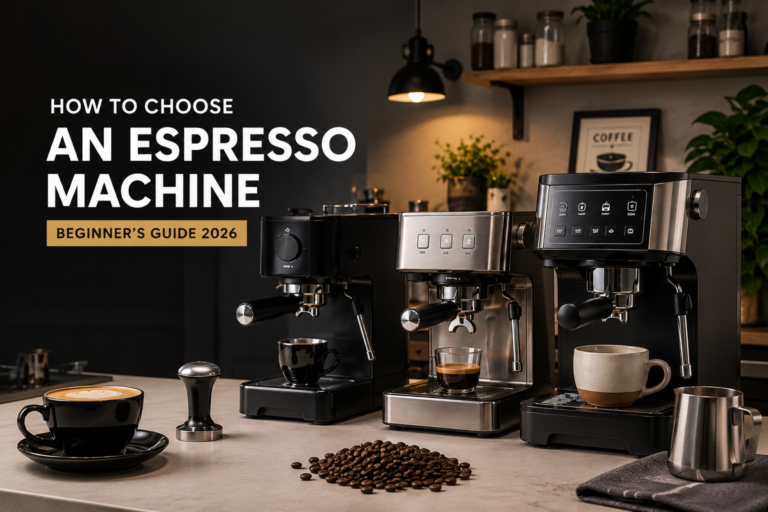

Best Dual Boiler Espresso Machines Under $1000 (2026): What Can You Actually Buy?
Finding a true dual boiler espresso machine under $1,000 is more difficult than many buyers expect.
While plenty of affordable espresso machines promise fast heating, precise temperature control, and powerful milk steaming, those features don’t necessarily mean you’re getting two separate boilers.
A genuine dual boiler espresso machine has one boiler dedicated to brewing espresso and another dedicated to producing steam. This allows the machine to maintain different temperatures for each task and makes preparing multiple milk-based drinks more convenient.
The problem is price.
In the U.S. market, established true dual-boiler machines generally cost considerably more than $1,000 when purchased new.
That doesn’t mean you have to abandon your budget. It means understanding which features matter most and considering alternatives that offer a similar everyday experience.
Quick Answer: Can You Buy a Dual Boiler Espresso Machine Under $1000?
Finding a new, genuine dual boiler espresso machine under $1,000 from an established manufacturer is currently unrealistic for most U.S. shoppers.
Your most practical options are:
- Look for a used or refurbished true dual-boiler machine from a reputable seller.
- Choose a more affordable espresso machine with separate brewing and steaming heating systems.
- Consider a high-quality single-boiler machine if you primarily drink straight espresso.
- Increase your budget if two independent boilers are essential.
The important distinction is that dual heating does not always mean dual boiler.
Quick Picks: Best Options Around a $1000 Budget
Best True Dual Boiler to Consider Used: Breville Dual Boiler BES920XL
The Breville Dual Boiler is a genuine two-boiler espresso machine with PID-controlled brewing temperature and a dedicated steam boiler.
However, its U.S. manufacturer-listed price is approximately $1,600, making it unsuitable as a new under-$1,000 recommendation.
Best for: Buyers who specifically want true dual-boiler performance and are willing to consider a carefully inspected used unit or increase their budget.
Best Affordable Dual-Heating Alternative: Turin Legato V2
The Turin Legato V2 combines a brew boiler with a separate steam thermoblock.
It is not a true dual-boiler machine, but its separate heating systems can make the brewing and steaming workflow more convenient than that of a traditional single-boiler machine.
It also offers a 58 mm portafilter and adjustable temperature controls.
Best for: Home baristas who want greater control and a more efficient milk-drink workflow without paying prosumer dual-boiler prices.
Availability varies. Confirm the exact model and current stock before purchasing.
Best Compact Alternative for Milk Drinks: Breville Bambino Plus
The Breville Bambino Plus uses a fast-heating ThermoJet system rather than two boilers.
Its automatic milk texturing makes it particularly appealing to beginners and households that regularly prepare cappuccinos and lattes.
Although it doesn’t provide the same simultaneous brewing-and-steaming architecture as a true dual boiler, it offers an accessible everyday experience at a substantially lower price.
Best for: Beginners, smaller kitchens, and buyers who prioritize convenience over advanced temperature control.
Best Traditional Single-Boiler Alternative: Rancilio Silvia
The standard Rancilio Silvia is a single-boiler espresso machine, not to be confused with the significantly more expensive Silvia Pro X.
Its traditional design and manual operation appeal to home baristas who enjoy learning espresso technique.
However, switching between brewing and steaming requires a temperature transition.
Best for: Espresso-focused buyers who value traditional construction and manual control.
Espresso Machine Comparison: Around $1000 and Below
| Machine | Heating System | Two Separate Boilers? | Best For |
|---|---|---|---|
| Breville Dual Boiler BES920XL | Dual boiler | Yes | Used-market shoppers or higher budgets |
| Turin Legato V2 | Brew boiler + steam thermoblock | No | Affordable dual-heating workflow |
| Breville Bambino Plus | ThermoJet | No | Convenience and automatic milk texturing |
| Rancilio Silvia | Single boiler | No | Traditional manual espresso |
Important: These are not four true dual-boiler machines. They represent different ways to approach a limited budget.
Prices and availability vary by retailer and should be checked before purchasing.
Breville Dual Boiler BES920XL: The True Dual-Boiler Benchmark
If you’re serious about purchasing a genuine dual-boiler machine, the Breville Dual Boiler is an important model to understand.
It uses a dedicated espresso boiler with PID temperature control alongside a separate steam boiler.
This arrangement allows brewing and steaming to operate independently, making the machine particularly useful for preparing multiple milk-based drinks.
What Makes It Worth Considering?
The biggest advantage is control.
With separate heating systems dedicated to different tasks, you can focus on espresso extraction without repeatedly changing the same boiler between brewing and steaming temperatures.
This is especially useful for home baristas experimenting with different beans and recipes.
The Budget Problem
The Breville Dual Boiler is not a new under-$1,000 machine.
Buyers working with a strict budget would need to explore the used or refurbished market, where prices and condition can vary considerably.
Before purchasing a secondhand unit, verify its operating condition, service history, voltage compatibility, return policy, and any available warranty.
Our verdict: An excellent example of genuine dual-boiler technology, but not an honest recommendation as a new machine under $1,000.
Turin Legato V2: A More Affordable Dual-Heating Approach
The Turin Legato V2 is interesting because it addresses one of the main reasons buyers want dual-boiler machines: reducing the inconvenience of switching between espresso brewing and milk steaming.
Instead of using two traditional boilers, it combines a dedicated brew boiler with a separate thermoblock for steam.
This distinction matters.
A thermoblock heats water as it passes through the system, while a boiler stores heated water. Both approaches have advantages, but they are not mechanically identical.
Why Consider It?
The Legato V2 offers features that appeal to espresso enthusiasts, including temperature adjustment and a 58 mm portafilter.
Its separate steam-heating system can also make preparing milk drinks more convenient than using a traditional single-boiler setup.
What Are the Trade-Offs?
It does not offer the same architecture or steam reserve as a genuine dual-boiler machine.
Buyers should also consider retailer support, warranty coverage, and parts availability.
Our verdict: Worth researching if your real goal is a more convenient brewing-and-steaming workflow rather than owning two physical boilers.
Breville Bambino Plus: Best for Everyday Convenience
Not everyone searching for a dual boiler actually needs one.
Sometimes the real goal is simply to prepare good espresso and milk drinks without a complicated morning routine.
That’s where the Breville Bambino Plus becomes interesting.
Its fast-heating system and automatic milk texturing are particularly helpful for beginners.
The compact design also makes it easier to fit into smaller kitchens than many prosumer machines.
Why Choose It?
The Bambino Plus is especially attractive if you:
- Make cappuccinos and lattes regularly.
- Prefer automatic milk texturing.
- Have limited counter space.
- Want a simpler learning curve.
- Don’t need independent brew and steam boilers.
What Are the Limitations?
It isn’t a true dual-boiler machine, and it doesn’t provide the same level of manual temperature adjustment as more advanced prosumer models.
Our verdict: A practical alternative for buyers who value ease of use more than advanced brewing hardware.
Rancilio Silvia: Best for Traditional Espresso Enthusiasts
The standard Rancilio Silvia remains a useful alternative for buyers who enjoy manual espresso preparation.
Unlike the Silvia Pro X, it uses a single boiler for both brewing and steaming.
That means the machine must change temperatures when switching between pulling espresso shots and frothing milk.
Why Consider It?
Its traditional design and manual controls appeal to buyers who want to develop their espresso-making skills.
It also uses a 58 mm portafilter, giving owners access to a broad range of compatible espresso accessories.
What Are the Limitations?
Preparing multiple milk drinks can be slower because the boiler must transition between brewing and steaming temperatures.
Our verdict: A good option for espresso enthusiasts who prioritize technique over speed and convenience.
Dual Boiler vs. Single Boiler vs. Thermoblock
Understanding the heating system is more useful than relying on marketing terms.
Dual Boiler
A genuine dual-boiler machine uses separate boilers for brewing and steaming.
This provides independent temperature management and can support simultaneous espresso extraction and milk steaming.
The main disadvantages are higher cost, greater complexity, and potentially more demanding maintenance.
Single Boiler
A single-boiler machine uses one boiler for both espresso and steam.
Because the two tasks require different temperatures, the machine needs time to switch between them.
This can be perfectly acceptable for someone making one or two drinks at a time.
Thermoblock or ThermoJet
These systems heat water on demand rather than maintaining large reservoirs of heated water.
They can offer fast warm-up times and compact designs.
However, the exact brewing and steaming capabilities depend on the individual machine.
Brew Boiler Plus Steam Thermoblock
Some machines combine a dedicated brew boiler with a separate thermoblock for steam.
This can improve workflow while avoiding the cost of two traditional boilers.
It is still important not to describe this arrangement as a true dual-boiler system.
What to Look for When Buying an Espresso Machine Around $1000
Temperature Control
Stable brewing temperatures are important for repeatable espresso extraction.
PID temperature control can help maintain consistent conditions, although not every PID-equipped machine allows the user to adjust the target temperature.
Milk Steaming
If you regularly make lattes or cappuccinos, evaluate the steam system carefully.
Consider whether you need manual steam control, automatic milk texturing, or the ability to brew and steam simultaneously.
Grinder Quality
A good espresso grinder is essential.
Spending your entire budget on an expensive machine while using an unsuitable grinder can limit your results.
If you don’t already own one, see our Best Coffee Grinders Under $200 guide.
Maintenance and Warranty
Before purchasing, consider cleaning requirements, replacement parts, retailer support, and warranty coverage.
These factors are particularly important when buying used or refurbished espresso equipment.
Total Setup Budget
Remember that your setup may also require a grinder, coffee scale, tamper, cleaning supplies, and suitable water.
A balanced setup is often a better investment than spending everything on the machine alone.
Is Buying a Used Dual Boiler Worth It?
For someone with a strict $1,000 budget, a used machine may be the most realistic route to genuine dual-boiler hardware.
However, secondhand espresso machines can require expensive repairs.
Before buying, ask about:
- The machine’s age and service history.
- Any leaks, pressure problems, or heating issues.
- Previous descaling and maintenance.
- Replacement parts and repair availability.
- Warranty or return options.
- Whether the machine is compatible with U.S. electrical standards.
A refurbished machine from a reputable specialist with clear return terms is generally preferable to an unverified private listing.
Don’t assume that a used dual boiler is automatically a better investment than a reliable new single-boiler machine.
Should You Increase Your Budget?
If two separate boilers are essential, increasing your budget may be more sensible than purchasing a machine that doesn’t meet your requirements.
Models such as the Breville Dual Boiler, Rancilio Silvia Pro X, and other prosumer dual-boiler machines are worth comparing once your budget extends beyond $1,000.
However, spending more is not necessary for everyone.
A compact machine with a capable grinder can produce excellent espresso without premium dual-boiler hardware.
Final Verdict: What Should You Actually Buy?
If your budget is strictly under $1,000 and you want a brand-new machine, don’t assume you’ll find a genuine dual boiler.
Instead, choose according to how you make coffee.
For buyers who want a more advanced brewing-and-steaming workflow, the Turin Legato V2 is an alternative worth investigating, provided it is available from a reputable retailer.
For everyday cappuccinos and lattes with less manual effort, the Breville Bambino Plus is an appealing choice.
For espresso enthusiasts who enjoy traditional manual operation, the Rancilio Silvia is worth considering.
And if a genuine dual boiler is non-negotiable, look carefully at used or refurbished options such as the Breville Dual Boiler BES920XL, or plan for a higher new-machine budget.
The best espresso machine isn’t necessarily the one with the most boilers. It’s the one that fits your coffee routine, your experience, and your budget.
Frequently Asked Questions
What is the best dual boiler espresso machine under $1000?
We couldn’t verify a broadly available new true dual-boiler machine under $1,000 from an established U.S. manufacturer. A used or refurbished machine may be an option, but condition and availability must be checked individually.
Is the Breville Bambino Plus a dual boiler?
No. The Bambino Plus uses Breville’s ThermoJet heating system, not two separate boilers.
Is the Turin Legato V2 a true dual boiler?
No. It combines a brew boiler with a separate steam thermoblock. It offers a dual-heating approach rather than two independent boilers.
What’s the difference between the Rancilio Silvia and Silvia Pro X?
The standard Silvia is a single-boiler machine. The Silvia Pro X is a more advanced true dual-boiler machine with independent temperature control and a substantially higher price.
Can you brew and steam at the same time with a dual boiler?
Yes, simultaneous brewing and steaming is a major advantage of genuine dual-boiler machines. Some other dual-heating systems can also support overlapping operation, depending on their design.
Do beginners need a dual boiler?
No. Beginners can make excellent espresso using a quality single-boiler or thermoblock machine paired with a suitable grinder.
Is a refurbished dual boiler worth buying?
It can be, provided the machine has been properly inspected and the seller offers reasonable support, return terms, and warranty coverage.
Should I spend $1000 on the machine alone?
Not necessarily. If you also need a grinder and accessories, allocating part of the budget to those items may produce a better overall setup.